 Available1
One-Page Site Builder
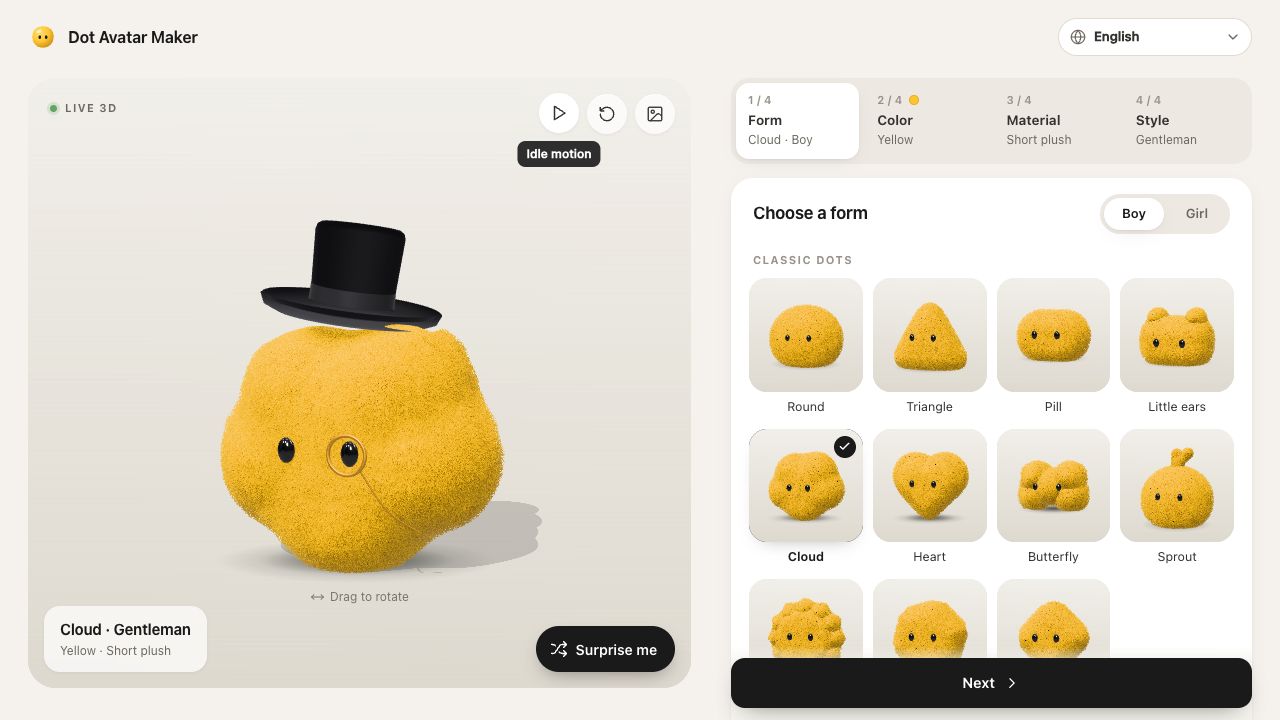
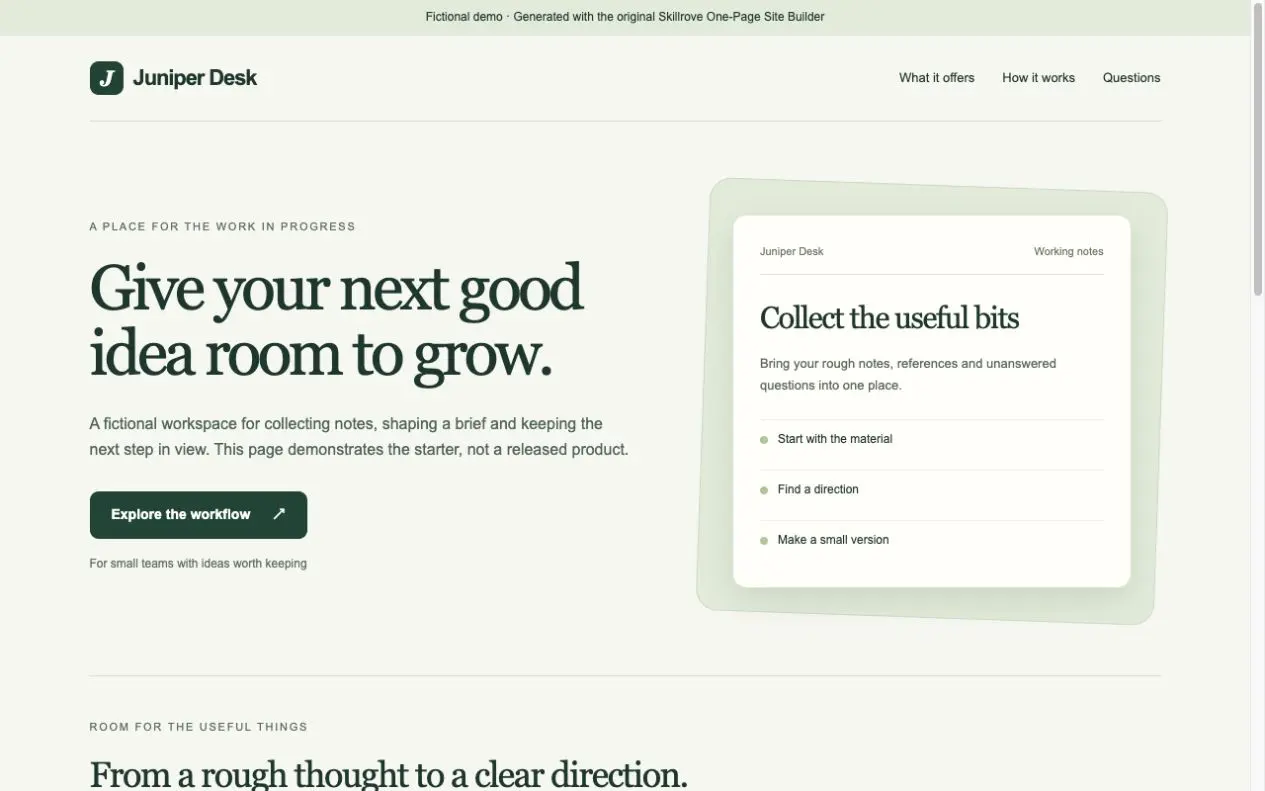
Turn your product brief into a responsive one-page website and a portable content document. An original, free Skillrove workflow with an editable fictional example.


 Codex +2
Turn incident records into a replayable evidence timeline, a reviewed postmortem and owned follow-ups. Import CSV in an offline local editor, preserve original timezones and uncertainty, and export an actual incident room, source files, report and action list.
Three actual generated reviews · real editor recording · clearly fictional records
Interactive incident room + original events CSVNormalized UTC events + reviewed milestone calculationsSource documents + exact SHA-256 evidence hashesReview Markdown + owned action CSVEditable brief + complete delivery manifestLocal editor + actual fresh delivery ZIPTeams reviewing authorized incident records and preparing a clear operational handoff.
Fictional exercises; time order and source hashes do not prove a root cause. Own source documents use the offline CLI.
Capabilities: CSV import and local first-run editor; timezone-aware UTC normalization; explicit reviewed milestone intervals; actual proportional event spacing; observed/reported/hypothesis filters; source document inspection with SHA-256; keyboard replay and theme controls; strict references and owned follow-up actions.
Deliverables: Offline HTML incident room, original and normalized event CSVs, timeline JSON with exact calculations, copied text evidence and hashes, review Markdown, action CSV, editable incident brief, complete integrity manifest and local delivery ZIP.
First run: Python 3.10+ standard library only. Ask your agent to run scripts/quickstart.py --preset relay --output ./incident-room, or scripts/start-studio.py --output ./my-incident-studio for the local editor. Own evidence documents stay beside your brief and use scripts/build-replay.py.
Examples: Relay checkout recovery, Atlas dispatch handoff and Beacon editorial delay are three distinct fictional exercises with actual generated output. Recovery intervals are 24 minutes, 3 hours and 2 days. Results and genuine local editor recording are shown separately.
Validation: Independent interval arithmetic, cross-zone/cross-day ordering, equal timestamp stability, duplicate/missing record rejection, explicit offset error recovery, hostile copy and CSV formula handling, actual source hashes, desktop/mobile interactions and real ZIP/JSON/CSV exports.
Original Skillrove MIT workflow, code and exercise records. Source hashes verify bytes, not truth; chronological order does not establish root cause. No live monitoring, messages, paid APIs or publishing service. $4.99 one-time; active Premium memberships include the package.
FROM PACKAGE TO FIRST RESULT
Start with a complete offline result, then bring authorized events and reviewed evidence. Three distinct fictional exercises cover checkout recovery, shipping handoffs and a delay across calendar days.
A traceable incident review with owned follow-ups.
Use Incident Replay Studio at .agents/skills/incident-replay-studio. Read SKILL.md. Review my authorized incident records. Confirm timestamp offsets, observed/reported/hypothesis statuses and impact/detection/mitigation/resolution event IDs. Generate an offline incident room, preserve evidence and uncertainty, then export a review and owned actions. Start with the Relay exercise and use the local editor if helpful. Ask for essential missing facts, preserve unknowns, and prepare a reviewed input. Check dependencies, generate into a new folder, inspect the actual files and explain any failed checks. You may open the bundled local studio for editing. Do not publish or purchase external services.Copy this request to your agent after installing the package. The local studio runs on your computer; the public preview is an example, not a hosted generation service.
These steps use a project folder. Open the project in your agent and run terminal commands from its root.
Package folder .agents/skills/incident-replay-studio
Download and unzip the package into the folder above. Keep all its files together, with SKILL.md directly inside that folder.
Downloads require a verified account and purchase access. Choose a new folder if this Skill is already installed.
Ask your agent to check the package dependencies, then launch the editor. Change the fields, generate real files, and download the complete delivery ZIP. Every run keeps previous results.
cd .agents/skills/incident-replay-studio
python3 scripts/start-studio.py --output ./my-incident-studioRead SKILL.md, review the generator and check its runtime requirements before running:
cd .agents/skills/incident-replay-studio
python3 scripts/quickstart.py --preset relay --output ./incident-roomOpen index.html. Replay events, select an actual timestamp and inspect its copied source. Filter reported records and hypotheses. Compare the exact milestone intervals, download review.md and actions.csv, then edit your brief and generate into a fresh folder. The local studio imports CSV, rejects missing offsets, records explicit timezone assumptions and exports actual ZIP files.
Python 3.10+ standard library only. All three exercises and source documents are fictional. Source hashes certify bytes, not truth; event order does not prove root cause. The local editor uses copied exercise evidence; own evidence files use the CLI. No paid API, monitoring service, message or publication is called.
If incident-room already exists, change the output to ./incident-room-2. Existing files are never overwritten.
Use Incident Replay Studio with my authorized incident records. Ask me to confirm timestamp offsets, observed/reported/hypothesis statuses and the four milestone event IDs. Generate a complete offline incident room, inspect actual source files, keep the cause as a hypothesis unless reviewed, and export the review and owned action list. Start the local editor when useful.
Tried this workflow? Help others decide with an honest review.
The listed individual package price is USD 4.99. Premium downloads require a confirmed purchase or active membership. Your agent subscription, model access and external provider credits are separate.
This release lists Codex, Claude Code, Cursor as intended installation hosts. Check the package’s dependencies and permissions before running it. These labels do not certify that every workflow has been tested in every agent.
The documented 1.0.0 workflow lists: Interactive incident room + original events CSV; Normalized UTC events + reviewed milestone calculations; Source documents + exact SHA-256 evidence hashes; Review Markdown + owned action CSV; Editable brief + complete delivery manifest; Local editor + actual fresh delivery ZIP. Some files or exports are optional; follow the package’s setup and inspect the delivered result.
Python 3.10+ standard library only. All three exercises and source documents are fictional. Source hashes certify bytes, not truth; event order does not prove root cause. The local editor uses copied exercise evidence; own evidence files use the CLI. No paid API, monitoring service, message or publication is called.